Keigo Morita

Undergraduate at San Diego State University · Weber Honors College · Cyber Defense Team.

Most of my work comes back to one question: what has to be true before a system is worth trusting.

Bio

Most of what I know came from building it: a Proxmox private cloud I designed and run as code, AI agent prototypes whose authority is bounded by application logic rather than by what a prompt asks them to respect, and a live archive I maintain for the person who depends on it. I work in English and Japanese, and spent a summer as a software engineering intern at Sony Interactive Entertainment in Tokyo. My interest in security started further back: the first thing I built was a Japanese-language learning site for children, co-built in high school, where dropping the planned account system and the personal data it would have collected was my first design decision that was really a security decision.

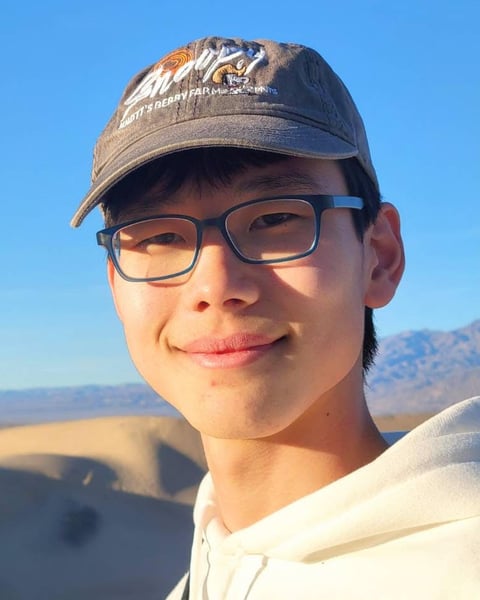
Portrait of Keigo Morita

Projects

Private cloud platform, built as code

I designed and built a Proxmox private cloud with Terraform and Ansible to run internal services and support projects that need real infrastructure. The platform brings together compute, certificate management, DNS, artifact distribution, and telemetry. A cold-start rebuild campaign tested whether those services could be recreated from their dependencies—not just kept working after a successful installation.

My role: platform design, deployment planning, troubleshooting, and direction and review of AI-assisted implementation and operations.

Stack: Proxmox VE · Terraform · Ansible · MinIO · step-ca · PowerDNS · DNSdist · Nexus · OpenTelemetry Collector · Splunk Enterprise

S3 Sentinel — an AI agent with bounded authority

S3 Sentinel is a proof of concept for assisting with S3 control-plane operations under deliberate limits on what the agent can do with the access it holds. The agent can genuinely perform operations; application logic decides which buckets a caller may manage, which tools exist at all, and which proposed changes stop for a human decision before executing.

My role: security architecture, design decisions, AWS integration, live verification, and direction and review of AI-assisted implementation.

Stack: Python · LangGraph · AWS Lambda · Bedrock · DynamoDB · S3 · SNS · SQS · IAM · Terraform · Splunk

SOC copilot — an auditable AI investigation workflow

Built for the Splunk Agentic Ops hackathon, this prototype takes a fired detection as context, investigates the underlying events, and produces an explained severity assessment. A human can then approve publication of an evidence dashboard. The goal was to make an investigation followable, from the alert through the evidence to the resulting action.

My role: product conception, security architecture, specification, and direction of an AI-assisted build across a roughly five-day window.

Stack: Python · Claude Agent SDK · Splunk MCP · Splunk Enterprise · Slack

Art | Crime Archive — maintaining an inherited live service

I maintain an inherited WordPress archive for its nontechnical owner, combining technical investigation, sandbox rehearsal, explanations of tradeoffs, and approved production changes. The work ranges from repairing article submission to correcting legacy attribution and investigating reliability problems. Each change has to serve the existing site and the person responsible for running it.

My role: maintenance investigation, change planning, owner communication, and production work, using AI-assisted analysis and tooling.

Environment: WordPress · PHP · SQL · Apache/shared hosting · restored Proxmox sandbox

SKGO Japanese — learning resources and connection beyond the classroom

SKGO began with a practical need: children learning Japanese needed engaging resources they could use outside class. I co-built the first website with my brother, then helped expand the project into volunteer-led activities connecting children with Japanese language and culture.

My contributions: most of the original mini-game, vocabulary cards, and origami slides; volunteer recruitment and coordination; workshop delivery.

Original stack: HTML · CSS · JavaScript

Experience

Sony Interactive Entertainment

Designed and developed full-stack prototypes for PlayStation 5 communication features. Reviewed existing product code and translated proposed features into technical requirements and implementation plans. Served as technical lead for an intern development team in a bilingual English–Japanese Scrum environment, coordinating tasks, conducting code reviews, and guiding implementation decisions.

Technologies: React · TypeScript · Node.js · Express · MongoDB

SDSU AI4Business Lab

Exploring the gap between trust in AI and its technical trustworthiness

My work spanned disaster-response information systems, AI-security literature, adversarial-attack experiments, and agent controls. In my second year, I founded and led a research team investigating the relationship between human trust in AI and technical reliability and security.

My contributions: research synthesis and framework development · team leadership · experimental tooling and reproduction · agent prototype design and implementation

Tools: Python · TensorFlow/Keras · Adversarial Robustness Toolbox · Docker/Compose · Jupyter · LangGraph · SQLite · LangSmith

Writing

The Biggest Lesson I Took Away from AI Engineer World’s Fair 2026

A reflection on AI security as a systems-engineering problem, connecting identity, authorization, isolation, verification, and observability. It examines why an agent’s authority should be scoped to the user it represents rather than treated as a capability the model inherently possesses.

The Bug Is in the Edges

An analysis of the TanStack supply-chain compromise, tracing how the attack crossed GitHub Actions execution, cache, and publishing-identity trust boundaries. The article explains how those handoffs connected into an attack chain and what that means for securing CI/CD pipelines.

SDSU Cyber Defense Team Fall 2023 – Present

CSAW CTF Final Round 2026
14th of 46 teams; four-person team, in person in New York City
Hack The Madness 2026
Final Four of 64 university teams in the Hack The Box tournament; won the West Region
National Cyber League
Team: 5th of 4,214 nationally, Fall 2025 (100th percentile)Individual: 316th of 7,010, Spring 2026 (96th percentile)
All seasons, Fall 2024 – Fall 2026
  • Fall 2024Individual: 706th of 8,483 (92nd percentile)Team: 27th of 4,893 (100th percentile)
  • Spring 2025Individual: 501st of 8,573 (95th percentile)Team: 28th of 457 in the Experienced Students bracket (94th percentile)
  • Fall 2025Individual: 336th of 7,873 (96th percentile)Team: 5th of 4,214 (100th percentile)
  • Spring 2026Individual: 316th of 7,010 (96th percentile)Team: 10th of 341 in the Experienced Students bracket (98th percentile)
  • Fall 2026Individual: 570th of 5,961 in the Standard Student bracket (91st percentile)Team: 67th of 3,034 in the Standard Student bracket (98th percentile)
WRCCDC
Invitational competitor
Beginner Web CTF Workshop
The aim was to give participants a practical way to approach unfamiliar problems: recognize a likely vulnerability, form a hypothesis, and test it with manual investigation tools. Participants then had time to attempt PicoCTF problems independently before I demonstrated solutions and explained how they worked.

Endorsement

“I have been teaching at the university level for 25 years and have had the privilege of working with thousands of high achieving students. Keigo stands out as one of the most exceptional students I have encountered during my career.”
Stacey L. Sinclair, Ph.D.Director, Weber Honors College, San Diego State University

Read the full letter